Identify Breaches in Compartmentation
Passive fire protection surveys identifying breaches in compartmentation, unsealed service penetrations and missing fire stopping across walls, floors and ceilings.
Fire stopping failures are one of the most common and most dangerous passive fire protection issues found in UK buildings. They are invisible during normal occupation — hidden above ceilings, below floors and within service risers — but catastrophic during a fire event. A Bellspire fire stopping survey finds them before they cost lives.
Why Fire Stopping is Critical
Fire stopping and compartmentation are fundamental to passive fire protection. They restrict the spread of fire and smoke, protect escape routes, and provide vital time for occupants to evacuate and emergency services to respond.
Service Penetrations
Every time a pipe, cable, or duct passes through a fire-resisting wall or floor, it creates a breach. These must be properly sealed with appropriate fire stopping materials.
Hidden Risks
Many compartmentation breaches are hidden above suspended ceilings, below raised floors, or within service risers where they go unnoticed until a fire occurs.
Legal Compliance
The Regulatory Reform (Fire Safety) Order 2005 requires the Responsible Person to ensure that adequate fire safety measures, including compartmentation, are maintained.
Post-Refurbishment Risk
Any building where contractors have installed new pipework, cabling, heating or data infrastructure is at elevated risk. Trades routinely create penetrations through fire-rated elements without installing correct fire stopping — leaving breaches that no one knows are there.
What Is Fire Compartmentation?
Fire compartmentation is the division of a building into separate fire-resistant zones using fire-rated walls, floors and doors. Its purpose is to contain a fire within the compartment where it starts — slowing the spread, protecting means of escape and giving occupants time to evacuate. Fire stopping is what maintains the integrity of these compartments wherever services pass through them. Without it, a fire can travel from one compartment to another within minutes — making the entire compartmentation system worthless. This is why every penetration through a fire-rated element must be correctly sealed with an approved product.
What We Check During a Survey
Our comprehensive fire stopping surveys identify breaches and ensure your building's compartmentation is intact.
Service Penetrations
Checking pipes, cables, and ducts passing through fire-resisting barriers for adequate fire stopping.
Linear Gap Seals
Inspecting gaps between fire-resisting elements, such as wall-to-floor or wall-to-ceiling joints.
Cavity Barriers
Ensuring cavity barriers are present and correctly installed within concealed spaces to prevent smoke and fire spread.
Structural Protection
Assessing the condition of fire protection applied to structural steelwork or concrete.

Our Fire Stopping Survey Process
Pre-Survey Review
We review existing building plans, fire strategies, and previous fire risk assessments to understand the required compartmentation lines.
Thorough Inspection
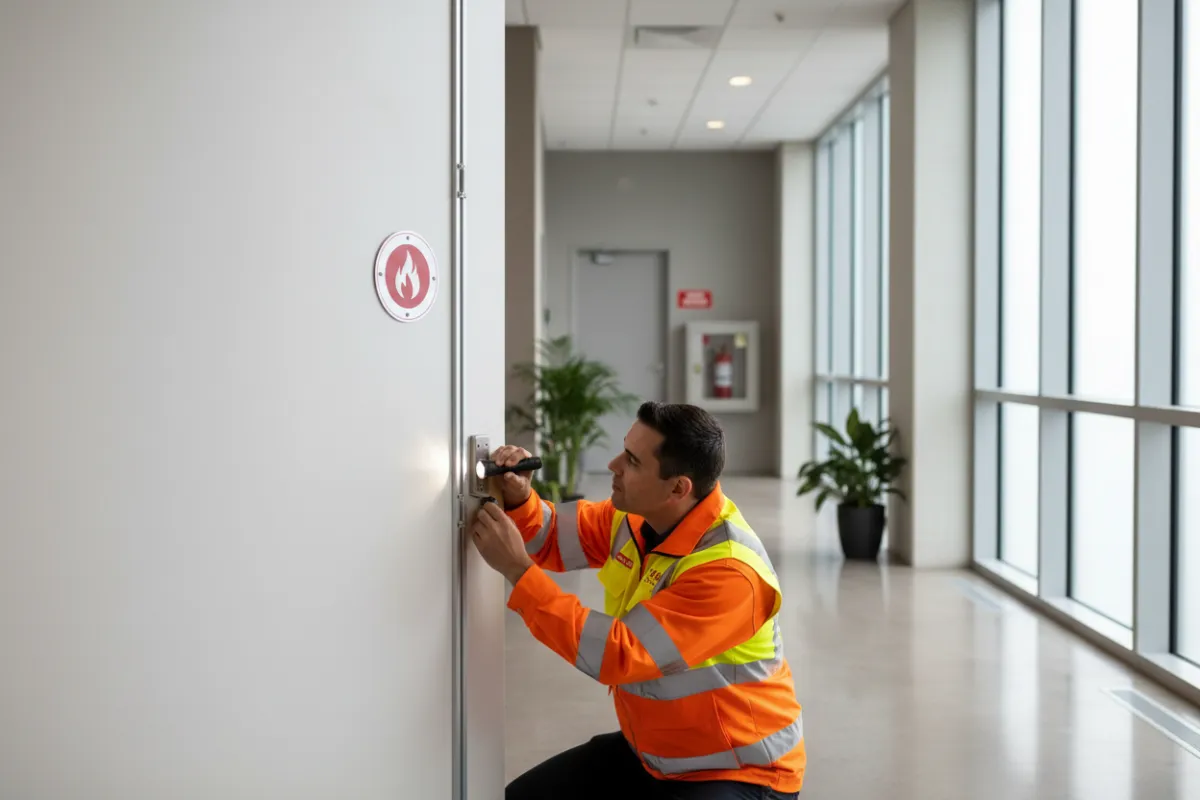
Our surveyors conduct a visual inspection of accessible fire-resisting walls, floors, and ceilings, checking for breaches and unsealed penetrations.
Photographic Documentation
Every identified breach is photographed and clearly marked on building plans (if provided) to ensure precise location tracking.
Detailed Reporting
Within 48 hours, you receive a comprehensive report detailing all findings, complete with photographs, locations, and a prioritised schedule for remedial works.
Who Needs a Fire Stopping Survey?
Residential Blocks
Following significant changes to fire safety legislation after the Grenfell Tower fire, passive fire protection in residential blocks is under greater regulatory scrutiny than ever. Freeholders, building owners and managing agents of residential blocks have heightened obligations to ensure compartmentation is intact and all service penetrations are correctly sealed. Bellspire provides fire stopping surveys for residential blocks across London, Hertfordshire, Bedfordshire and Buckinghamshire.
Post-Refurbishment Properties
Any property where contractors have carried out works — installing pipework, cabling, heating systems or data infrastructure — is at elevated risk of fire stopping breaches. A post-refurbishment fire stopping survey identifies every breach and produces a remedial schedule before the building is re-occupied or handed over to new tenants.
Schools & Public Buildings
Schools, academies and public buildings typically have complex service installations built up over decades of refurbishment. Fire stopping breaches in educational buildings are common and often undocumented. Bellspire inspects school fire stopping outside term dates to minimise disruption to staff and pupils.
Commercial Properties & Facilities Managers
Commercial office buildings, warehouses and mixed-use developments with active maintenance programmes benefit from regular fire stopping inspection as part of their annual passive fire protection management programme. An increasing number of commercial leases and insurance policies now require documented fire stopping compliance.
Fire Stopping Surveys — Frequently Asked Questions
What is fire stopping?
Fire stopping is a passive fire protection material used to seal penetrations in fire-rated walls, floors and ceilings. It prevents fire and smoke from spreading through the building fabric. Materials include intumescent collars, pillows, mastics and boards. It must be correctly specified for the type of penetration and the fire rating of the element being penetrated.
Is fire stopping a legal requirement?
Yes. Under the Regulatory Reform (Fire Safety) Order 2005, the Responsible Person has a duty to maintain passive fire protection. This is also covered under Building Regulations Approved Document B. Breached fire stopping is a failure of this legal duty, carrying a high risk of enforcement action and prosecution following a fire incident.
How does a fire stopping survey differ from a fire risk assessment?
A fire risk assessment is a broad review of all fire hazards across the whole premises. A fire stopping survey is a specialist, detailed inspection of passive fire protection specifically within the building fabric. A fire risk assessment may flag passive fire protection as requiring a specialist survey, meaning many buildings ultimately need both.
How often should a fire stopping survey be carried out?
There is no single mandated frequency. It should be carried out following any refurbishment or contractor works, annually as part of active passive fire protection management, whenever a fire risk assessment identifies passive fire protection as a concern, or after any fire incident however minor.
What happens after a fire stopping survey?
You will receive a comprehensive written report within 48 hours. This includes photographic evidence of every identified breach, its precise location, and a prioritised remedial schedule. This provides a clear, actionable roadmap for your contractors to repair the breaches and restore your building's compartmentation to a compliant standard.
Need a Fire Stopping Survey?
Ensure your building's compartmentation is intact and compliant with professional fire stopping surveys from Bellspire.
We provide fire stopping surveys across London, Hertfordshire, Bedfordshire, Buckinghamshire and the wider UK. Call 0300 373 5873 or email info@bellspire.co.uk. Office hours Monday to Friday 9am to 5pm. Emails and quote requests monitored 24/7.
Clear Reports. Actionable Advice.
- Comprehensive breach identification
- Photographic evidence of defects
- Prioritised remedial schedule
- 48-hour report turnaround
Request your quote
Complete this form and we will get back to you within 24 hours.